
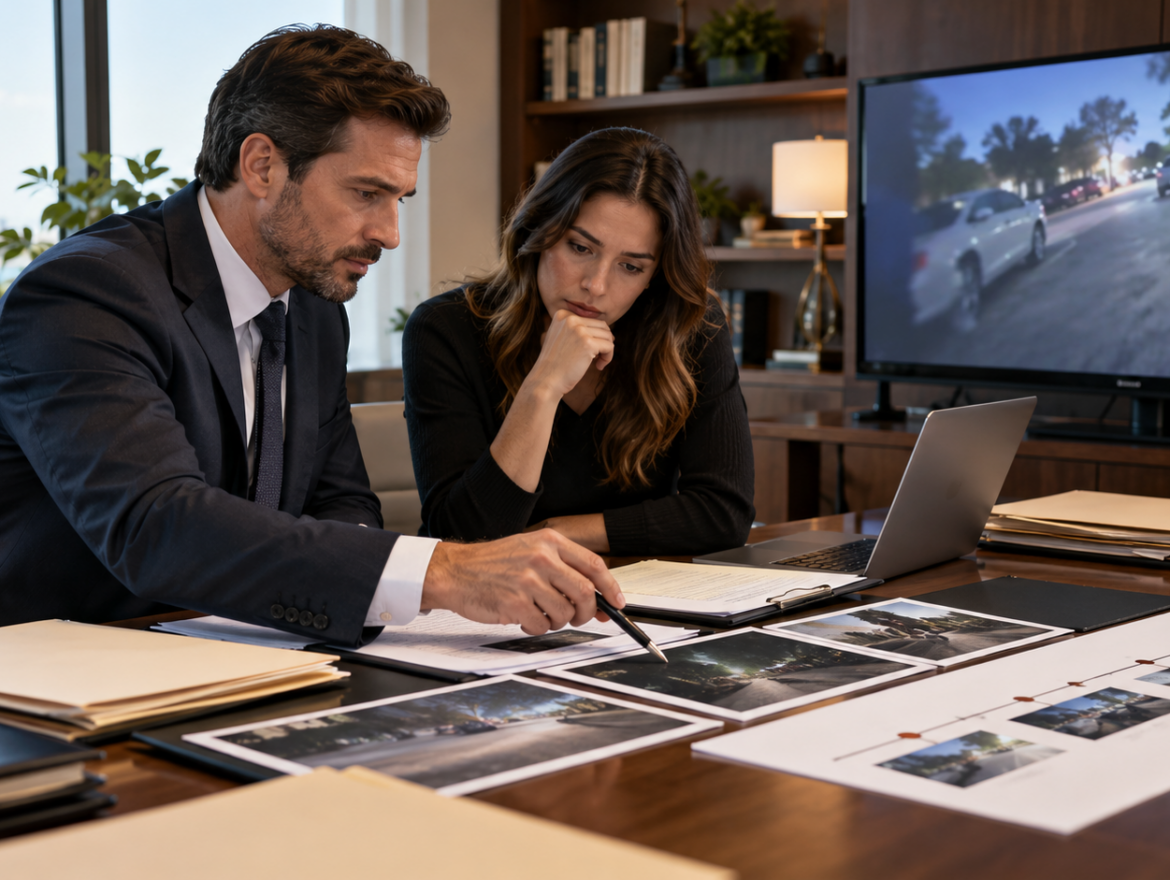
A criminal defense evidence review is more than reading the arrest report from beginning to end. Police reports, body-camera video, dispatch records, photographs, witness accounts, and physical or digital evidence may describe the same event from different vantage points. Counsel can test whether those sources fit together, identify material that may exist but has not yet been produced, and decide which questions require follow-up.
This work is case-specific. A gap does not automatically prove misconduct, and an inconsistency does not automatically decide the case. The practical task is to separate what a record actually shows from what a person inferred, then preserve the issues that may matter in negotiation, motion practice, or trial.
Start with an evidence map, not a single narrative
A report often organizes an officer’s account, but it may summarize events that unfolded across several locations and devices. A useful first pass lists each potential source: incident and supplemental reports, arrest affidavits, 911 audio, computer-aided dispatch entries, body-camera and vehicle video, scene photographs, property receipts, laboratory submissions, witness statements, nearby surveillance footage, and relevant phone or location records.
The list should also identify who created or controlled each item and when. A body-camera file held by an agency is different from video held by a store, apartment building, rideshare driver, or homeowner. The location of a source affects how counsel may request it and how quickly it could be overwritten.
In a Florida state prosecution, formal discovery is governed by Florida Rule of Criminal Procedure 3.220 after the charging document is filed. Before assuming that every record must already be available, counsel should identify the procedural stage, the agency involved, and any applicable exemption or protective restriction.
Compare sequence, timestamps, and points of view
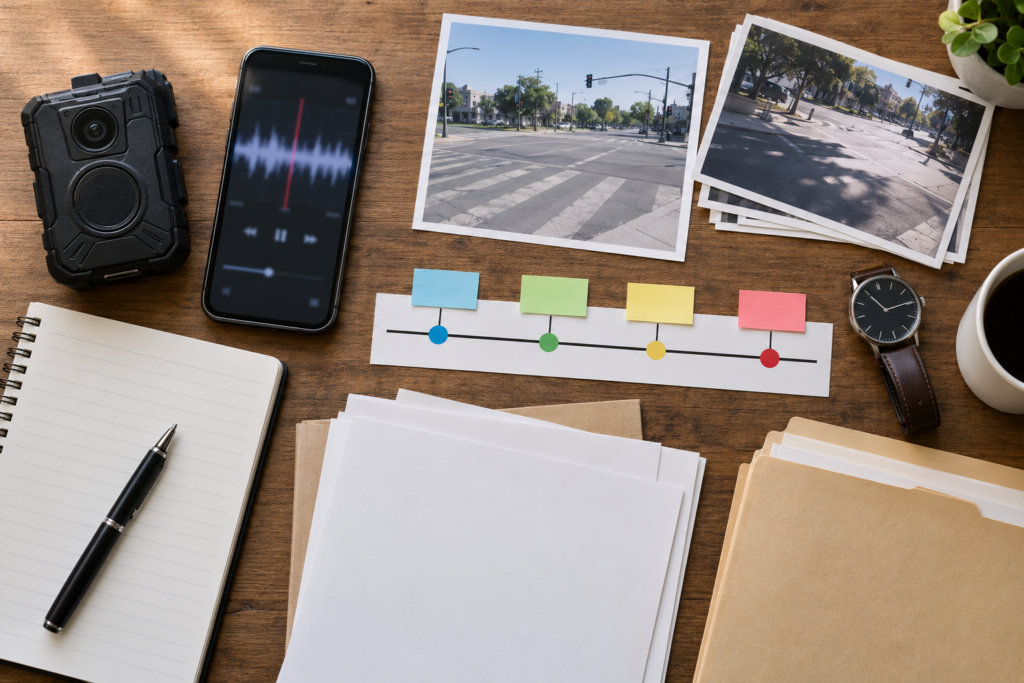
The next step is usually a neutral chronology. When was the first call received? When did each officer arrive? When did a camera begin recording? When was an item photographed, collected, packaged, or transferred? A timeline can reveal whether two records truly conflict or merely describe different moments.
Body-camera video deserves its own comparison because the camera’s position, field of view, lighting, audio quality, and activation time can limit what it captures. Florida law requires an agency that permits body cameras to adopt policies addressing use, maintenance, storage, retention, and release. It also permits an officer to review footage before writing a report in many circumstances. Those provisions appear in section 943.1718, Florida Statutes. A report and video therefore should be compared carefully without assuming that one is automatically complete or that every difference is significant.
Counsel may also compare objective details that are easy to overlook: the direction a person was facing, distances between objects, background sounds, lighting, the order of commands, visible injuries, and what happened just before or after the portion described in a report. A useful chronology records uncertainty instead of filling it with guesses.
“Missing” can describe several different situations
When expected material is absent, the first question is what “missing” means. The item may never have been created, may exist under another incident number, may have been retained by a different agency, may be exempt from public release while an investigation is active, may require a specific discovery request, or may no longer exist under an ordinary retention schedule.
Florida’s public-records law exempts active criminal intelligence and active criminal investigative information from ordinary public inspection. The current language is in section 119.071, Florida Statutes. That exemption is not the same as a conclusion that the material does not exist, and a public-records request is not interchangeable with criminal discovery.
The legal significance of unavailable evidence depends on facts such as who controlled it, what preservation duty applied, what the evidence likely contained, and whether its absence causes legally relevant prejudice. A missing file does not create an automatic dismissal rule. Counsel may need agency policies, audit information, testimony, a court order, or other proof before deciding whether a remedy is available.

Look beyond the sources named in the report
An evidence review should ask what independent sources could confirm or challenge the official account. Nearby cameras, building-access records, vehicle data, photographs taken by bystanders, receipts, dispatch audio, weather records, and contemporaneous messages may add context. Some sources are short-lived, so counsel may consider targeted preservation steps when the facts support them.
Do not contact a witness to coordinate an account, enter private property to obtain footage, access another person’s account, or alter a device. Preserve your own material in its original form. If you know of a camera or record system, give counsel the location, approximate time, owner if known, and reason it may be relevant.
Prepare questions that make the review more precise
A client can help without trying to investigate the case alone. Useful questions include:
- Which reports and recordings have been received, and which expected sources remain outstanding?
- Does the video begin before the key event, or only after officers arrived?
- Are the timestamps synchronized across dispatch, body-camera, surveillance, and phone records?
- Who collected each physical item, and do the records identify later transfers or testing?
- Which statement is based on personal observation, and which repeats what someone else reported?
- Is there a lawful, time-sensitive way to preserve third-party video or data?
Bring counsel original notices, the charging document if one exists, bond or release conditions, and a list of known evidence sources. Mark estimates as estimates. Do not annotate original files, crop video, reset a phone, delete messages, or post a public explanation.
A criminal defense evidence review should stay tied to the actual charge
The most useful comparison is not a hunt for any inconsistency. It asks whether a fact relates to an element of the alleged offense, identification, a defense, the legality of a search or statement, witness credibility, or sentencing exposure. A discrepancy may be important, immaterial, or capable of an innocent explanation. Its value depends on the rest of the record.
Beaton Law Firm’s criminal-defense practice can review the evidence available in a specific Coral Gables or Miami-Dade case, identify unresolved sources, and explain the procedural options that may apply. A criminal defense evidence review cannot guarantee an outcome, but an organized record can make the factual and legal questions clearer.
Get case-specific advice before acting on a perceived gap
If a report appears inconsistent with video or an expected recording is absent, preserve what you have and discuss it with defense counsel. Do not accuse a witness, investigator, or agency based on an incomplete file. Counsel can assess whether more material should be requested, whether a deadline matters, and whether the issue supports investigation or court action.
This article provides general information, not legal advice. Evidence rules, disclosure duties, public-records exemptions, and available remedies depend on the jurisdiction, procedural stage, and facts. Reading this page or contacting the firm does not create an attorney-client relationship unless the firm agrees to represent you.