

A federal target letter is a formal warning that prosecutors consider a person a target of a federal grand jury investigation. It is not an indictment, an arrest warrant, or a finding of guilt. It does mean the investigation has reached a serious stage and that decisions about records, interviews, testimony, and communications should be made carefully.
Anyone who receives a target letter should keep the complete letter and envelope, note every deadline, preserve potentially relevant information, and speak with federal criminal defense counsel before contacting agents or prosecutors. The right response depends on the investigation, the evidence, and the recipient’s role.
What “Target” Means in a Federal Investigation
The Department of Justice’s Justice Manual defines a target as a person whom the prosecutor or grand jury has substantial evidence linking to a crime and whom the prosecutor views as a potential defendant. The manual distinguishes a target from a subject, whose conduct is within the scope of the investigation, and from a witness who may simply have relevant information.
Those labels are important, but they are not permanent guarantees. The government’s view may change as it gathers documents, interviews witnesses, analyzes digital evidence, or hears grand jury testimony. A target letter should therefore be evaluated as part of the larger investigation rather than read in isolation.
A Target Letter Is Not the Same as a Subpoena
A target letter usually communicates the recipient’s status and may identify the general subject of the investigation. It may also invite the recipient to meet with prosecutors or request an opportunity to testify. A subpoena, by contrast, is a legal demand for testimony, documents, or both. A person can receive one without the other, and the obligations created by each document are different.
Do not assume that an invitation to meet is routine or that appearing before the grand jury is automatically helpful. The Justice Manual explains that a prosecutor ordinarily should consider a reasonable request by a target or subject to testify when specified conditions are met, but grand jury testimony is under oath and can create significant risk. Whether to seek a meeting or offer testimony requires a fact-specific assessment.
Preserve Records Without Altering Them
Once a person knows of a federal investigation, relevant information should be preserved. Depending on the matter, that may include email, text messages, cloud files, financial records, contracts, calendars, photographs, access logs, accounting data, and business records. Organizations may also need to identify employees or vendors who control relevant information and suspend routine deletion practices.
Preservation does not mean rewriting, reorganizing, or “cleaning up” the evidence. Do not delete communications, backdate documents, replace original files, or ask others to change their accounts. Keep the target letter and its attachments intact. Counsel can help define a defensible preservation process and separate responsive material from unrelated or privileged information.

Avoid Unplanned Interviews and Public Explanations
A person who wants to correct the record may feel pressure to call an agent, prosecutor, colleague, or potential witness immediately. That can make the situation harder. An incomplete memory, an estimate presented as fact, or a statement that conflicts with an existing record may become evidence in its own right. Public posts and internal workplace messages can create similar problems.
Before answering substantive questions, identify who is asking, the agency involved, the stated purpose of the contact, and whether counsel can participate. Do not lie, conceal records, or interfere with another person’s account. It is possible to preserve rights and respond lawfully without improvising an explanation before the evidence has been reviewed.
Review the Government’s Likely Theory
A useful defense review starts with the statutes or conduct mentioned in the letter, the relevant time period, the agencies involved, and any earlier subpoenas, warrants, audits, or interviews. Counsel may compare the government’s apparent theory with the underlying documents and identify what evidence bears on knowledge, intent, identity, participation, or loss.
In a financial or business investigation, for example, the meaning of a transaction may depend on contracts, approval chains, accounting practices, professional advice, and who had access to particular systems. In a communications-based case, context and authorship may matter as much as an isolated message. A careful chronology helps distinguish established facts from assumptions and identifies records that should be located promptly.
Consider Privilege and Separate Interests
Target letters involving a business can create difficult questions about who a lawyer represents. Counsel for the company may not represent an employee, officer, or owner personally. People whose interests appear aligned at the beginning of an investigation may later have different legal positions. The existence and scope of attorney-client privilege also depend on the purpose, participants, and handling of a communication.
Before sharing legal advice, internal reports, or communications with third parties, obtain guidance about privilege and confidentiality. When records belong to an employer or another organization, do not remove them without authorization. Counsel can pursue lawful methods of preserving and reviewing information while respecting ownership and privacy obligations.
Possible Responses to a Federal Target Letter
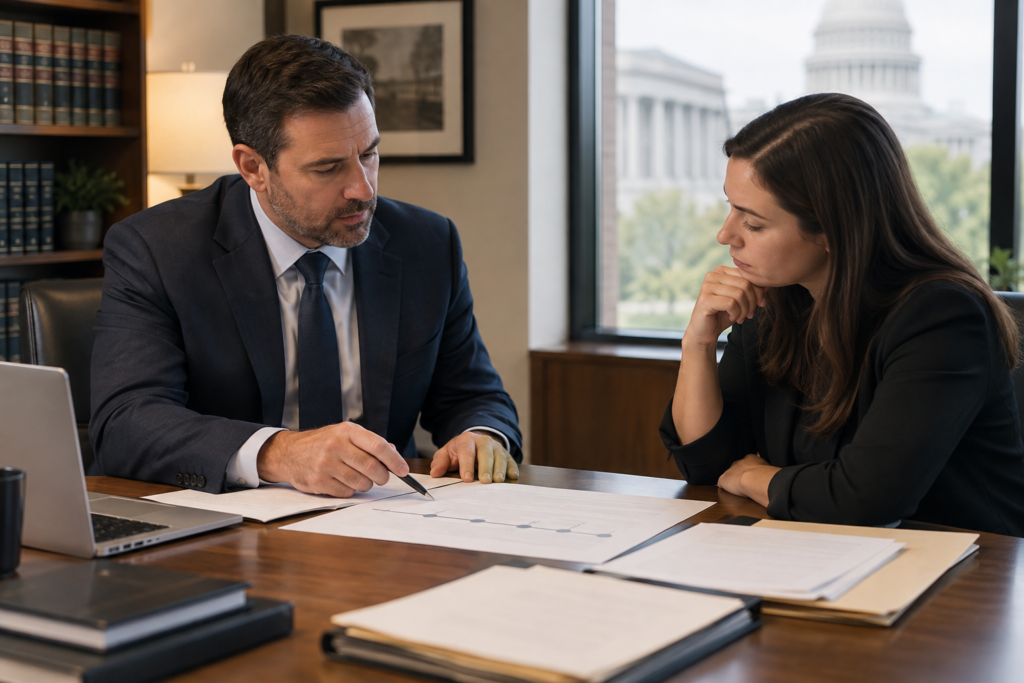
There is no single correct response to every target letter. Depending on the circumstances, counsel may contact the prosecutor to confirm status, clarify deadlines, learn the general scope of the investigation, address a related subpoena, present documents, request a meeting, or advise against voluntary testimony. In some matters, counsel may submit a focused explanation supported by reliable records. In others, making a presentation before the evidence is understood would be unwise.
The Department of Justice’s public guidance on target letters notes that letters are not required in every case. A person may therefore be under investigation without receiving one. Conversely, receiving a letter does not establish that an indictment will occur. It signals a need for an informed strategy, not a guaranteed outcome.
How Federal Defense Counsel Can Help
Beaton Law Firm’s federal criminal defense practice handles investigations and prosecutions involving federal agencies and grand juries. Counsel can evaluate the letter, preserve evidence, communicate with the government when appropriate, and advise on interviews, document productions, presentations, and potential charges. When an investigation concerns financial transactions, the firm’s money laundering defense practice may also be relevant to the issues under review.
Early involvement does not promise that charges will be avoided. It can help prevent avoidable mistakes, protect privileged communications, and ensure that decisions are based on the actual record. A target letter should be treated as time-sensitive even when it does not state an immediate court date.
Sources and Further Reading
- U.S. Department of Justice: Justice Manual, Grand Jury
- United States Courts: Federal Rules of Criminal Procedure
This article is for general information only and is not legal advice. The facts and law in an individual investigation may differ, and no attorney-client relationship is created by reading this article or contacting the firm.