

In a federal criminal defense case, discovery can include a large production of records, messages, reports, recordings, and other material. “Discovery” is not necessarily one complete folder delivered at one time. Different rules govern different kinds of information, and the timing and scope may depend on the charge, the evidence, court orders, and local procedures. Understanding the categories can help a person and counsel organize review without assuming that every government record is automatically available.
Rule 16 covers specified categories—not every government file
Federal Rule of Criminal Procedure 16 identifies categories of information that may be subject to disclosure, including certain statements by the defendant, documents and objects, reports of examinations and tests, and expert-witness information. The rule has conditions and exceptions. For example, a request and materiality or intended-use requirements may apply to some categories. It also contains limits concerning government work product and internal government documents.
Rule 16 can create reciprocal disclosure obligations for the defense in defined circumstances. That does not mean the parties have identical obligations or that every item must be exchanged on the same timetable. The actual rule, any protective order, case-management order, and the practices of the court should be reviewed together. The official Federal Rules of Criminal Procedure provide the text of Rule 16.
Rule 16 is not automatically a request for every record held by every agency. The prosecution’s possession or control, the rule’s specific terms, and the case context matter. If relevant records are held elsewhere, the procedure for seeking them may differ; counsel can assess whether another rule, subpoena, or court process applies.
How federal criminal defense counsel organizes discovery
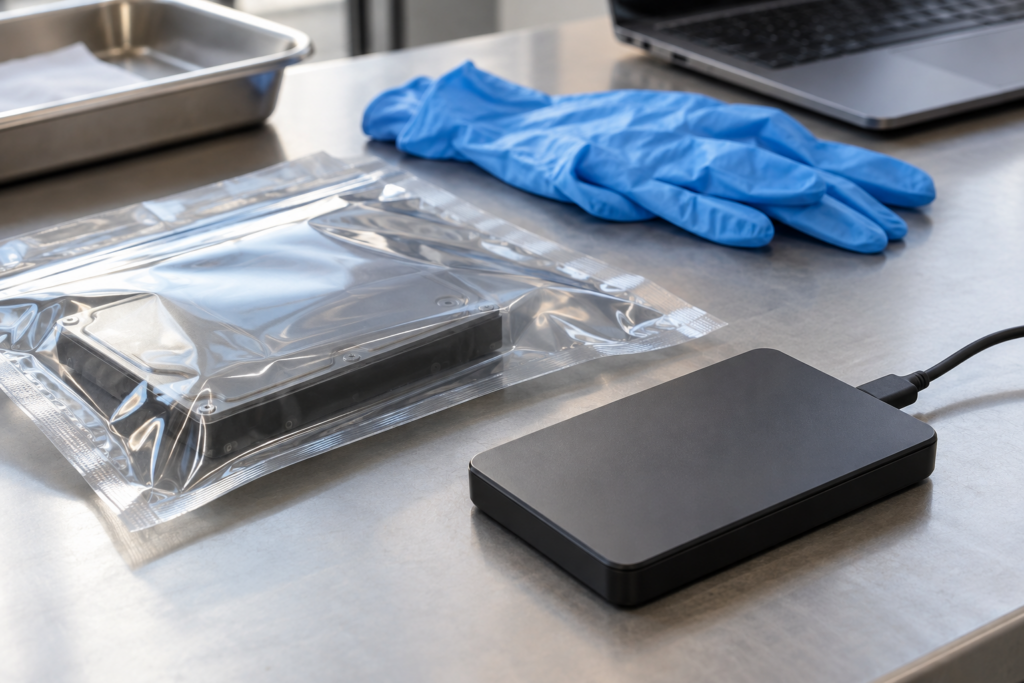
A useful first step is to understand what has been produced and how it is organized. Productions may arrive in several installments or formats, with indexes, file ranges, recordings, or specialized viewers. Counsel may compare the production index with the files received, note missing or unreadable items, and preserve the original media. A production log can record when each group arrived, its source, format, and any stated restrictions.
That bookkeeping is not a substitute for legal analysis. It helps identify practical questions: Does an index refer to an item that is absent? Are two copies different? Is a recording difficult to open? Does a report describe an examination whose underlying data is not included? A defense team can raise specific issues through the appropriate channel rather than relying on a vague assertion that “something is missing.”
Brady and Giglio are separate disclosure considerations
Rule 16 is not the only source of disclosure obligations. Under the constitutional principles commonly called Brady and Giglio, the government must disclose material exculpatory and impeachment evidence. The precise application depends on the facts and controlling law. The Department of Justice also publishes internal policies instructing its prosecutors about disclosure; those policies may encourage disclosure beyond constitutional minimums, but the Justice Manual cautions that department policy does not itself create a general discovery right or an enforceable right for a defendant.
This distinction matters because a request for “the whole file” may not identify the legal basis or information sought. Counsel may instead evaluate a concrete issue—for example, whether information bears on an element, a witness’s credibility, or the reliability of evidence the government intends to use. The DOJ’s Justice Manual discussion of criminal discovery describes the department’s policies and the relationship among Rule 16, Brady, and Giglio.
Witness statements may follow a different schedule
The Jencks Act addresses statements and reports of government witnesses. In general, 18 U.S.C. § 3500 limits compelled production of a covered witness statement until after that witness testifies on direct examination, subject to statutory definitions and other applicable rules or orders. Federal Rule of Criminal Procedure 26.2 also addresses production of witness statements in specified proceedings. In practice, a court order, agreement, local procedure, or a prosecutor’s disclosure decision may result in earlier production, but the timing should not be assumed in every case.
The statutory text is available at 18 U.S.C. § 3500. The case schedule and any order should be checked before drawing conclusions about when a statement will be produced or how it may be used.

What a careful review may compare
Depending on the case, counsel may compare reports with recordings, messages with transaction records, or an expert conclusion with the data and method behind it. The purpose is not to assume that a discrepancy proves misconduct or innocence. It is to identify what the materials show, what they do not show, and whether a focused follow-up request or motion is appropriate.
People who receive case materials should keep them intact and follow counsel’s instructions about confidentiality and secure storage. Do not alter files, rename originals in a way that loses context, post material online, or share it with people who are not authorized to receive it. Discovery can include sensitive personal information, protected information, or material subject to a court order. Ask counsel how to handle it before copying or distributing it.
Questions to ask about the process
In a federal criminal defense matter, useful questions may include: What categories have been produced? Are more productions expected? Which court orders or local procedures govern timing? Is any material restricted by a protective order? How should digital evidence be preserved and reviewed? What is the process for identifying a missing, corrupted, or inaccessible item? The answers will vary with the case and the district.
Beaton Law Firm’s federal criminal defense practice describes its federal-defense services. A lawyer can review the charging documents, discovery orders, and actual production to identify case-specific next steps. This article is general information, not legal advice, and does not assess any individual case.