
Facing a first-time criminal charge in Miami? Learn what factors may affect jail time, possible alternatives, and why early legal defense matters.

Can You Go to Jail for a First-Time Offense in Miami?


Can You Go to Jail for a First-Time Offense in Miami?

Facing a criminal charge for the first time can be overwhelming. Many people assume that having no prior criminal record means they will automatically avoid jail, but that is not always the case. In Florida, the outcome of a first-time offense depends on the type of charge, the facts of the case, the evidence, and how the case is handled from the beginning.

If you have been arrested or are under investigation in Miami, it is important to speak with an experienced criminal defense attorney as early as possible.


First-Time Offenses Can Still Carry Serious Penalties

A first arrest does not always mean a minor case. Depending on the charge, a person with no prior record may still face jail time, probation, fines, court costs, community service, mandatory classes, license consequences, or a permanent criminal record.

The seriousness of the charge matters. A misdemeanor may carry different penalties than a felony, but both can create lasting consequences if not handled properly.


Factors That Can Affect Jail Time

Every criminal case is different. Judges and prosecutors may consider many factors when determining how a case should move forward.

Factors that may influence the outcome include:

  • The severity of the charge
  • Whether anyone was injured
  • The strength of the evidence
  • Whether weapons were allegedly involved
  • The person’s prior record, if any
  • Whether the case involves a victim or financial loss
  • How quickly a defense strategy is developed

Even when jail is a possible penalty, there may be opportunities to challenge the evidence, negotiate the case, or pursue alternatives depending on the circumstances.


Common First-Time Criminal Charges in Miami

First-time defendants may face many different types of criminal allegations. Some cases begin with a traffic stop, domestic dispute, store accusation, financial investigation, or police report.

Common first-time charges may include DUI, drug possession, theft, shoplifting, resisting arrest, domestic violence, assault, fraud, possession of a firearm, or other criminal accusations.


Alternative Outcomes May Be Available

In some first-time cases, alternatives to jail may be available. Depending on the charge and the facts, this may include probation, diversion programs, treatment programs, community service, counseling, restitution, or other negotiated resolutions.

However, these options are not automatic. Having an attorney involved early can help determine whether alternative outcomes may be available and whether the case can be resolved in a way that protects your future.


Do Not Treat a First Arrest Like a Small Problem

Many people make the mistake of assuming that a first offense will be dismissed or handled lightly. This can lead to missed opportunities, damaging statements, poor decisions, or accepting a plea without understanding the long-term consequences.

A criminal record can affect employment, housing, immigration status, professional licenses, education opportunities, and your reputation. Taking the case seriously from the start is one of the best ways to protect yourself.


Why Early Legal Representation Matters

The earlier a criminal defense attorney becomes involved, the sooner they can begin reviewing the evidence, identifying weaknesses in the case, preserving important information, and advising you on what to do next.

In some cases, early intervention may help reduce the risk of charges being filed or improve the chances of a better resolution. In other cases, it allows your attorney to prepare for bond hearings, negotiations, motions, or trial strategy.

Facing criminal charges in Miami or Broward? Beaton Law Firm provides skilled defense for state and federal cases. Call (305) 478-1991 today.

What to Do If You Are Under Criminal Investigation in Miami


What to Do If You Are Under Criminal Investigation in Miami

Not every criminal case begins with an arrest. In many situations, a person may become the subject of an investigation long before formal charges are filed. You may receive a phone call from a detective, learn that someone has made an accusation, be contacted by law enforcement, receive a subpoena, or hear that police are asking questions about you.

If you believe you are under criminal investigation in Miami, the steps you take early can make a meaningful difference in protecting your rights and preparing your defense.


Do Not Speak to Law Enforcement Without a Lawyer

One of the most important things to understand is that you are not required to explain yourself to police without legal counsel. Many people believe that speaking with investigators will help clear things up. Unfortunately, even innocent statements can be misunderstood, taken out of context, or used against you later.

If law enforcement contacts you, it is usually best to politely decline to answer questions and request to speak with a criminal defense attorney first.


Do Not Wait for Formal Charges

Many people wait to contact an attorney because they have not been arrested yet or because no formal charge has been filed. This can be a serious mistake. Criminal investigations often develop quietly while police collect evidence, speak with witnesses, review records, or prepare a warrant.

Early legal representation may help you:

  • Protect your constitutional rights
  • Avoid making damaging statements
  • Preserve important evidence
  • Communicate properly with investigators
  • Begin preparing your defense immediately

The sooner an attorney becomes involved, the more opportunities there may be to protect your interests before the case moves further.


Preserve Evidence Immediately

If you believe you are under investigation, it is important to preserve anything that may help your defense. This may include text messages, emails, call logs, receipts, photographs, videos, social media messages, location records, business records, or witness information.

Evidence can disappear quickly. Surveillance footage may be deleted, messages may be lost, and witnesses may become harder to reach. Early preparation allows your defense team to review the facts while important information is still available.


Avoid Posting About the Situation Online

Social media can create serious problems during a criminal investigation. Posts, comments, photos, videos, and even private messages may be reviewed by law enforcement or prosecutors.

Something that seems harmless at the time could later be used to suggest guilt, intent, motive, or inconsistent statements. If you are under investigation, avoid discussing the matter online and speak with your attorney before deleting anything related to the situation.


Common Criminal Investigations in Miami

Criminal investigations can involve a wide range of allegations. Some cases begin with a police report. Others may begin with financial records, complaints, audits, traffic stops, confidential informants, search warrants, or digital evidence.

Investigations may involve allegations related to domestic violence, drug crimes, fraud, theft, grand theft, money laundering, sex crimes, resisting arrest, federal crimes, and other serious criminal accusations.


Early Defense Can Make a Difference

Waiting until after an arrest can limit your options. When an attorney is involved early, they can begin reviewing the allegations, identifying weaknesses in the case, protecting your rights, and advising you on how to avoid mistakes.

In some situations, early intervention may help reduce the risk of charges being filed. In others, it allows your legal team to prepare for bond hearings, negotiations, evidence challenges, or trial strategy from the beginning.

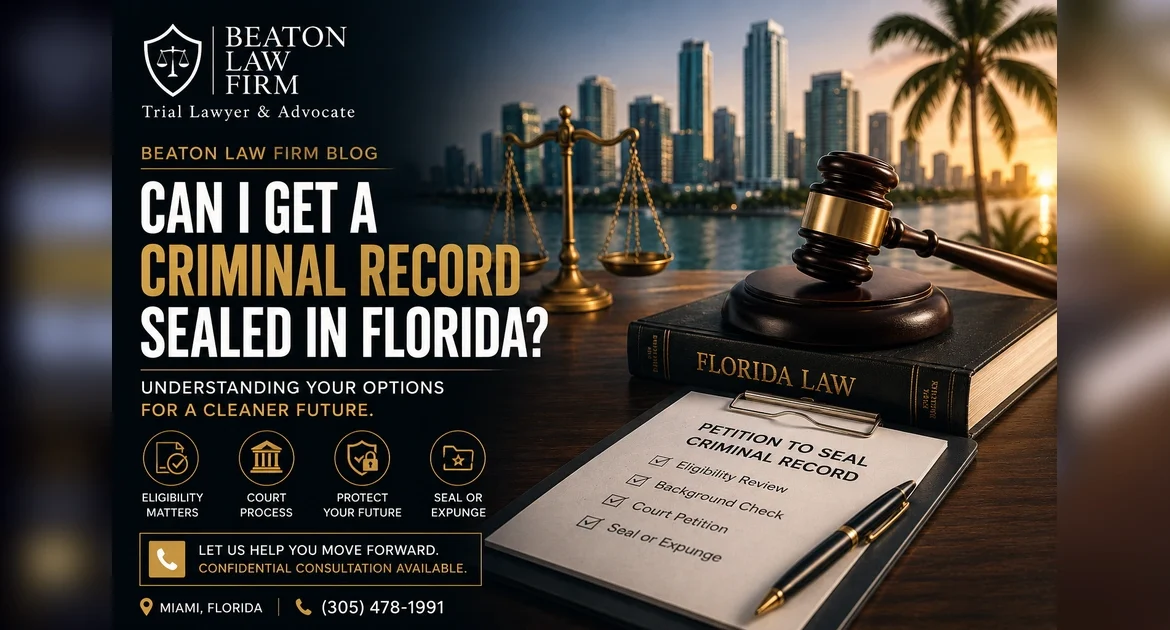
Beaton Law Firm criminal record sealing attorney helping clients seal or expunge a criminal record in Florida

Can I Get a Criminal Record Sealed in Florida?


Can I Get a Criminal Record Sealed in Florida?

A criminal record can follow you long after a case is over. Even if your case was dismissed, dropped, or resolved without jail time, the record may still appear in background checks and create problems with employment, housing, professional licensing, school applications, and your reputation.

For many people, sealing or expunging a criminal record can be a powerful step toward a cleaner future. But not every case qualifies, and the process is more detailed than simply asking for the record to disappear.

If you have a criminal record in Florida, here is what you should know.

What Is the Difference Between Sealing and Expungement?

Sealing and expungement are related, but they are not the same.

When a record is sealed, the general public usually cannot access it. However, certain government agencies and authorized parties may still be able to view it in specific situations.

When a record is expunged, it is generally more restricted. Many agencies must physically destroy or remove the record from public access, although certain limited records may still be retained by FDLE for official purposes.

In simple terms, sealing limits public access. Expungement usually provides a stronger level of record protection.

Why Would Someone Want to Seal or Expunge a Record?

A criminal record can create real-life consequences, even when the case did not result in a conviction.

A record may affect:

  • Job applications
  • Background checks
  • Apartment applications
  • Professional licenses
  • College or graduate school applications
  • Immigration concerns
  • Business opportunities
  • Reputation and peace of mind

Many people are surprised to learn that an arrest alone can remain visible unless steps are taken to seal or expunge the record.

Who May Qualify to Seal a Criminal Record in Florida?

Eligibility depends on the facts of the case and the person’s overall criminal history. In general, sealing may be available for certain cases where the person was not adjudicated guilty and the charge is not legally disqualified.

However, Florida law has many exceptions. Some offenses may not qualify even if adjudication was withheld. Prior criminal history can also affect eligibility.

Before filing a petition with the court, a person usually must apply to FDLE for a Certificate of Eligibility. This certificate does not guarantee the court will grant the petition, but it is usually required before moving forward.

Who May Qualify for Expungement?

Expungement may be available in certain cases where the charge was dismissed, dropped, or not formally filed. It may also apply in other limited circumstances depending on the type of case and the person’s record.

Florida law generally requires a person seeking expungement to first apply for a Certificate of Eligibility before petitioning the court.

The court still has discretion, which means eligibility does not automatically guarantee approval.

Why Was There Still a Record If My Case Was Dropped?

This is one of the most common questions people ask.

In Florida, an arrest can create a criminal history record even if the case was later dismissed or the State Attorney’s Office decided not to prosecute. That record may still exist unless it is sealed, expunged, or otherwise restricted under Florida law.

That means a person can have no conviction and still deal with the consequences of a visible arrest record.

Common Reasons a Petition May Be Denied

A sealing or expungement request may run into problems if:

  • The person has a prior disqualifying criminal history
  • The offense is not eligible
  • The person was adjudicated guilty
  • The paperwork is incomplete
  • The FDLE certificate was not obtained
  • The petition was filed incorrectly
  • The prosecutor objects
  • The court decides not to grant the request

Because the process is technical, mistakes can delay the case or result in denial.

How a Criminal Defense Attorney Can Help

A criminal defense attorney can review your record, determine whether you may qualify, help prepare the required documents, communicate with the proper agencies, and file the petition with the court.

An attorney can also help explain the difference between sealing and expungement and identify whether there are any issues that could prevent approval.

For many people, this process is about more than paperwork. It is about moving forward without one mistake or accusation continuing to affect their life.

Want to Clear Your Criminal Record in Florida?

If you have a criminal record in Florida, you may have options. Sealing or expungement can help protect your privacy and reduce the impact of an old arrest or criminal case.

Beaton Law Firm helps clients understand their rights and explore options for clearing or limiting access to their criminal record.

Contact Beaton Law Firm today for a confidential consultation.

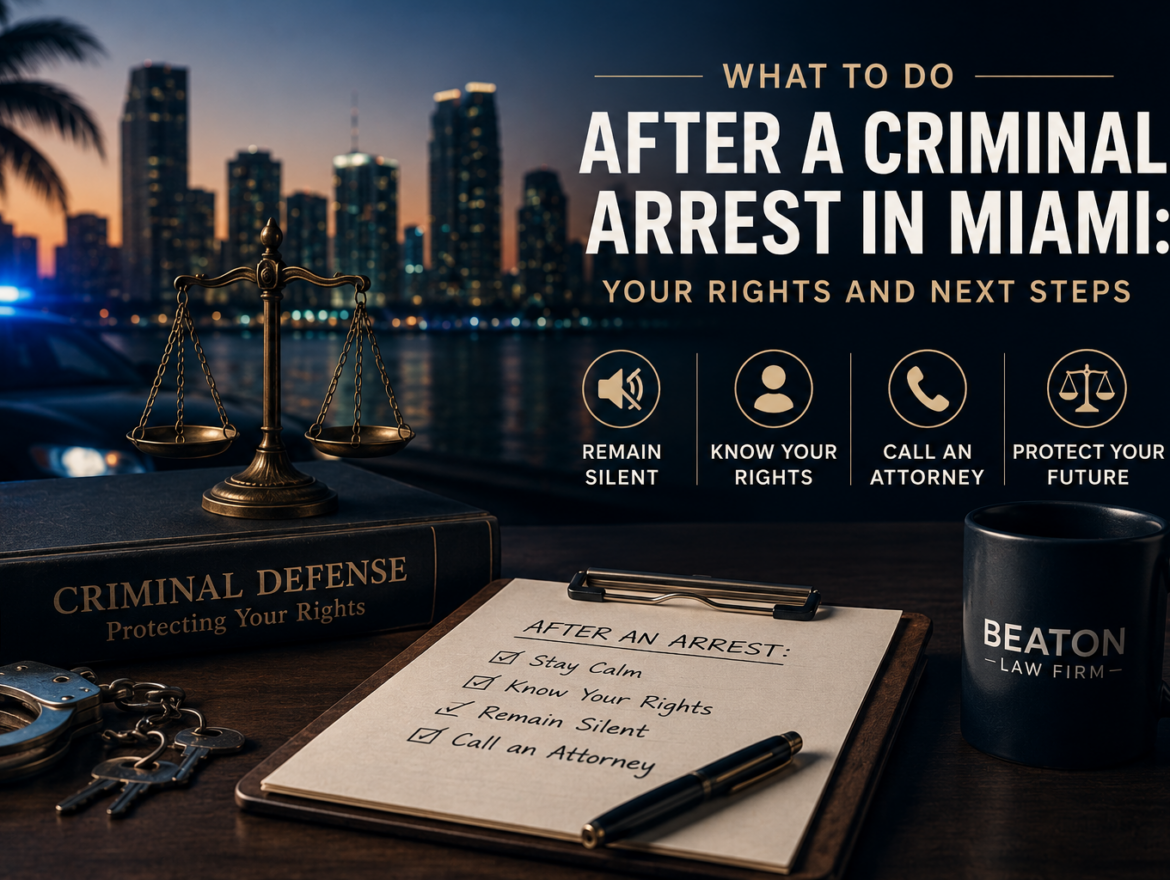
Miami criminal defense attorney helping a client after an arrest

What to Do After a Criminal Arrest in Miami: Your Rights and Next Steps


Being arrested can be one of the most stressful and confusing experiences in a person’s life. Whether the charge is a misdemeanor or a felony, what you do immediately after an arrest can have a major impact on your case, your freedom, and your future.

If you or a loved one has been arrested in Miami, it is important to stay calm, understand your rights, and avoid making mistakes that could hurt your defense.

Remain Calm and Exercise Your Right to Remain Silent

After an arrest, many people feel the need to explain themselves. They may believe that if they tell their side of the story, the situation will be cleared up quickly.

Unfortunately, statements made to law enforcement can be used against you later. Even innocent explanations can be misunderstood, taken out of context, or used to support the prosecution’s case.

You have the right to remain silent. You are not required to answer questions about the allegations. You can politely say that you wish to remain silent and want to speak with an attorney.

Do Not Resist or Argue With Police

Even if you believe the arrest is unfair, arguing with police or physically resisting can make the situation worse. Resisting arrest or obstructing an officer can lead to additional charges.

The safest approach is to remain calm, avoid confrontation, and address the legal issues later with your defense attorney.

Do Not Discuss the Case on the Phone or Online

After an arrest, avoid talking about the case over recorded jail calls, text messages, social media, or messaging apps. Conversations may be monitored, saved, or used as evidence.

You should also avoid posting about the arrest online. Even vague posts can create problems for your defense.

Understand the Charges Against You

Criminal charges in Miami can range from misdemeanors to serious felonies. Common charges include:

  • Domestic violence
  • Battery
  • Drug possession
  • Drug trafficking
  • DUI
  • Theft
  • Fraud
  • Resisting arrest
  • Probation violations
  • Weapons charges

Each charge has different penalties, defenses, and long-term consequences. The sooner you understand what you are facing, the sooner you can begin building a defense.

Protect Your Bond and Release Conditions

After an arrest, the court may set bond or impose release conditions. These conditions can include no-contact orders, travel restrictions, drug testing, GPS monitoring, or other requirements.

Violating release conditions can result in being taken back into custody. If you do not understand a condition, speak with your attorney before taking any action.

Preserve Important Evidence

Evidence can disappear quickly. If there are text messages, videos, photos, call logs, receipts, GPS records, witness names, or surveillance footage that may help your case, preserve them.

Do not alter or delete anything. Instead, save the information and provide it to your attorney.

Contact a Miami Criminal Defense Attorney as Soon as Possible

Early legal representation can make a significant difference. A criminal defense attorney can review the facts, explain your options, protect your rights, communicate with prosecutors, and begin building your defense.

In some cases, early action may help with bond issues, evidence preservation, witness interviews, negotiations, or motions challenging the prosecution’s case.

Arrested in Miami? Do Not Face the System Alone

An arrest is not a conviction. You still have rights, and the prosecution still has the burden of proving the case.

Contact Beaton Law Firm today for a confidential consultation.

Charged With Domestic Violence in Miami? What Happens Next

Charged With Domestic Violence in Miami? What Happens Next


A domestic violence arrest in Miami can feel overwhelming, especially because these cases often move quickly. One argument, one accusation, or one misunderstanding can turn into an arrest, a no-contact order, court dates, and serious consequences before you fully understand what is happening.

If you were charged with domestic violence, the most important thing to know is this: the case is not over just because someone made an accusation. The prosecution still has to prove the charge, and there may be defenses available depending on the facts.

What Counts as Domestic Violence in Florida?

Domestic violence is not one single charge. In Florida, it can include several types of criminal accusations when the people involved have a qualifying family or household relationship. These cases may involve allegations of battery, assault, stalking, false imprisonment, or other offenses.

That means a domestic violence case can come from many different situations, including:

  • A dispute between spouses or former spouses
  • A disagreement between people who live together
  • A conflict involving people who share a child
  • An argument between family or household members
  • An accusation that physical contact occurred during a confrontation

Even if the alleged injury is minor or there are no visible injuries, the case can still be treated seriously by law enforcement and prosecutors.

Why Domestic Violence Arrests Are Different

Domestic violence cases can be more complicated than other misdemeanor or felony cases because they often involve personal relationships, emotions, family issues, and conflicting stories.

After an arrest, the court may order no contact with the alleged victim. This can create major problems if you live together, share children, or need to communicate about property, work, or family responsibilities.

A domestic violence case can also affect:

  • Your criminal record
  • Your employment
  • Your professional license
  • Your immigration status
  • Your custody or family court situation
  • Your right to possess firearms
  • Your reputation

That is why these cases should never be treated casually.

Can the Alleged Victim Drop the Charges?

One of the biggest misunderstandings about domestic violence cases is the belief that the alleged victim can simply “drop the charges.”

In reality, once an arrest is made, the case is usually in the hands of the State Attorney’s Office. The alleged victim may tell prosecutors they do not want to move forward, but the final decision is generally made by the prosecution.

Prosecutors may still try to continue the case if they believe they have evidence, such as:

  • Body camera footage
  • 911 calls
  • Photos of injuries
  • Witness statements
  • Text messages
  • Prior incidents
  • Statements made at the scene

This is why a strong defense strategy matters early.

Common Defense Issues in Domestic Violence Cases

Every case is different, but domestic violence defenses may involve questions such as:

  • Was there actual unlawful contact?
  • Was the accusation exaggerated or false?
  • Was the person acting in self-defense?
  • Were both parties involved in the confrontation?
  • Did police arrest the wrong person?
  • Are there inconsistencies in the statements?
  • Is there enough evidence to prove the case beyond a reasonable doubt?

Sometimes police respond to a chaotic scene and make a fast decision based on limited information. A criminal defense attorney can review the evidence, identify weaknesses, and challenge the prosecution’s version of events.

What Should You Do After a Domestic Violence Arrest?

If you were arrested, avoid discussing the case with the alleged victim, witnesses, or anyone connected to the case. Do not text, call, message, or contact the alleged victim if there is a no-contact order in place.

You should also avoid posting about the case online. Social media posts, messages, photos, and comments can be used against you.

The best step is to speak with a criminal defense attorney as soon as possible. Early representation can help protect your rights, address bond conditions, review the evidence, and begin building your defense before the case moves too far.

Talk to a Miami Domestic Violence Defense Lawyer

A domestic violence charge can affect your freedom, family, career, and future. But an arrest is not a conviction, and you still have rights.

If you were charged with domestic violence in Miami, contact Beaton Law Firm to discuss your case and your defense options.

Facing Domestic Violence Charges? What You Need to Know. Domestic Violence Defense Lawyer

Facing a Domestic Violence Charge?


Facing a Domestic Violence Charge? Why You Need to Take It Seriously From Day One

Domestic violence charges are among the most serious and emotionally charged criminal cases. These cases can move quickly, and the consequences can affect far more than your criminal record. A domestic violence allegation may impact your home, your children, your job, your reputation, your firearm rights, and your future.

Even when the alleged victim does not want to press charges, the case may still continue. That is why it is critical to understand what happens after an arrest and why early legal representation matters.

Domestic Violence Cases Are Different From Other Criminal Charges

Domestic violence cases often involve people who know each other well: spouses, former partners, family members, roommates, or people who share a child. Because emotions are high, these cases can involve conflicting stories, misunderstandings, exaggerated claims, or allegations made during a heated argument.

However, once police are called, the situation can quickly become a criminal case controlled by the State — not just the people involved.

The Alleged Victim Does Not Control the Case

A common misconception is that the alleged victim can simply “drop the charges.” In many criminal cases, the prosecutor decides whether to move forward. Even if the alleged victim later changes their mind, refuses to cooperate, or says the incident was misunderstood, the State may still continue the prosecution.

Prosecutors may rely on:

  • 911 calls
  • Body camera footage
  • Police reports
  • Photos of alleged injuries
  • Witness statements
  • Text messages
  • Social media posts
  • Prior incidents
  • Medical records

This is why a defense strategy must begin early.

No-Contact Orders Can Create Serious Problems

After a domestic violence arrest, the court may issue a no-contact order. This means the accused person cannot contact the alleged victim directly or indirectly. That may include phone calls, text messages, emails, social media messages, contact through friends or family, or showing up at the person’s home or workplace.

Violating a no-contact order can lead to additional charges or being taken back into custody.

Even if the alleged victim reaches out first, you should not respond unless your attorney has confirmed it is legally safe to do so.

A Conviction Can Affect Your Future

A domestic violence conviction can carry long-term consequences beyond fines, probation, or jail. It may affect:

  • Employment opportunities
  • Professional licenses
  • Housing applications
  • Child custody issues
  • Immigration status
  • Firearm possession rights
  • Your public reputation
  • Future background checks

Because the consequences can be so serious, these cases should never be treated casually.

Possible Defense Strategies

Every case is different, but a criminal defense attorney may examine several key issues:

Was There Enough Evidence?

The State must prove the case. Allegations alone are not always enough. Your attorney can challenge weak, inconsistent, or unsupported evidence.

Was It Self-Defense?

In some cases, the accused person may have acted to protect themselves. Self-defense can be an important issue when the facts support it.

Were There Conflicting Statements?

Domestic violence cases often involve emotional, fast-moving situations. Statements made during stress may not always match later evidence.

Was the Arrest Proper?

Police must follow the law. If your rights were violated, your attorney may be able to challenge certain evidence.

Were Injuries Misinterpreted?

Not every mark, bruise, or injury proves a crime occurred. Context matters.

Do Not Try to Fix the Situation Yourself

Many people make the mistake of trying to explain, apologize, negotiate, or reconnect after an arrest. This can create major legal issues. The safest move is to speak with your attorney before taking any action.

Why Early Legal Help Matters

A defense lawyer can help you understand the charges, prepare for court, address bond conditions, review evidence, communicate with the prosecutor, and protect your rights throughout the process.

The sooner your attorney begins working on the case, the more time they have to build a strong defense.

Final Thoughts

A domestic violence charge is not something to ignore. Even if you believe the situation will “work itself out,” the legal system may continue moving forward. Protect yourself early.

Call to Action

If you are facing a domestic violence charge, contact our criminal defense law firm today. We can review your case, explain your rights, and help you take the next step with confidence.

What to Do After Being Arrested | Criminal Defense Lawyer

What to Do Immediately After Being Arrested: A Criminal Defense Lawyer’s Guide


Being arrested is one of the most stressful experiences a person can go through. Whether the charge is a misdemeanor, felony, DUI, domestic violence, drug offense, fraud allegation, or another criminal matter, the first few hours and days after an arrest can have a major impact on the outcome of your case.

Many people panic, say too much, or make decisions without understanding the consequences. The most important thing to remember is simple: an arrest is not a conviction. You still have rights, and what you do next matters.

Stay Calm and Do Not Argue With Police

The moment you realize you are being detained or arrested, your goal should be to avoid making the situation worse. Arguing, resisting, running, or becoming aggressive can lead to additional charges.

Even if you believe the arrest is unfair, the street is not the place to fight your case. That fight belongs in court, with evidence, legal strategy, and a defense attorney protecting your rights.

Use Your Right to Remain Silent

One of the biggest mistakes people make after an arrest is trying to “explain everything” to police. Many people believe they can talk their way out of the situation. Unfortunately, statements made during or after an arrest can often be used by prosecutors later.

You do not have to answer investigative questions. You can calmly say:

“I am invoking my right to remain silent. I want to speak with an attorney.”

After that, stop talking about the case.

Do Not Discuss the Case on Jail Calls

Many people do not realize that jail phone calls are often recorded. Conversations with friends, family, spouses, or co-defendants may be reviewed by law enforcement or prosecutors.

Avoid discussing what happened, who was involved, where you were, what evidence exists, or what you plan to do. Even casual comments can be taken out of context and used against you.

Contact a Criminal Defense Attorney Quickly

The earlier a defense lawyer gets involved, the better. An attorney may be able to help with bond issues, evidence preservation, witness contact, court dates, and early negotiations with the prosecution.

A criminal defense lawyer can begin reviewing key questions such as:

  • Was the stop or arrest legal?
  • Were your rights violated?
  • Was there probable cause?
  • Did police conduct an illegal search?
  • Are witnesses reliable?
  • Is the evidence strong enough to support the charge?

Early action can make a major difference.

Avoid Posting About the Arrest Online

Social media can damage a criminal case. Posts, comments, photos, videos, messages, and location tags may become evidence. Even deleting posts can sometimes raise additional concerns.

Do not post about the arrest, the alleged victim, police officers, witnesses, or the charges. Ask friends and family not to post about the case either.

Start Gathering Important Information

While you should not investigate the case yourself in a way that could create risk, you should write down important details while they are fresh in your mind. This may include:

  • Where you were before the arrest
  • Who was with you
  • Names of possible witnesses
  • Whether there were cameras nearby
  • What officers said or did
  • Whether you were searched
  • Whether you were questioned
  • Whether you asked for an attorney

Share this information only with your lawyer.

Do Not Contact the Alleged Victim or Witnesses

In many cases, especially domestic violence, battery, stalking, or harassment allegations, contacting the alleged victim can create serious legal problems. There may be a no-contact order in place, even if the other person wants to talk.

Violating a court order can result in new charges, bond revocation, or jail time. Speak with your attorney before contacting anyone connected to the case.

Take Every Court Date Seriously

Missing court can lead to a warrant for your arrest. Even if you believe the case is minor, every hearing matters. Your attorney can help you understand what to expect, what to bring, and how to prepare.

Final Thoughts

An arrest can feel overwhelming, but it does not define your future. The most important steps are to stay silent, avoid discussing the case, protect your rights, and speak with a criminal defense attorney as soon as possible.

Call to Action

If you or a loved one has been arrested or charged with a crime, contact our criminal defense team today. We can review the charges, explain your options, and begin building a defense strategy immediately.

Domestic Violence Defense Attorney Miami

Arrested for Domestic Violence in Miami? Protect Your Rights Immediately


Understanding Domestic Violence Charges in Miami

Domestic violence charges in Miami may result in arrest, release conditions, and protective-order proceedings, even if the alleged victim does not wish to press charges. These cases typically involve accusations between family members, spouses, or individuals living in the same household. In South Florida, law enforcement follows strict protocols that can lead to rapid escalation of what may have started as a verbal dispute.

Penalties for Domestic Violence in South Florida

A domestic violence conviction in Miami can result in jail time, probation, mandatory counseling programs, and a permanent criminal record. Courts may also issue restraining orders that limit contact with the alleged victim and affect living arrangements, employment, and child custody. In many cases, even a first-time offense can carry serious long-term consequences.

Defenses Against Domestic Violence Allegations

Defending against domestic violence charges requires a fact-specific review. Common defenses include self-defense, false allegations, lack of evidence, or inconsistencies in witness statements. In Miami cases, emotions often run high, and accusations may not always reflect the full truth of the situation.

How Protective Orders Impact Your Case

Protective orders, also known as restraining orders, are commonly issued in domestic violence cases in South Florida. These orders can restrict where you live, who you contact, and even your ability to see your children. Violating a protective order can lead to additional criminal charges, making it essential to fully understand and comply with court requirements while your case is pending.

What to Review After an Arrest

If you have been arrested for domestic violence in Miami, reviewing the charge, release conditions, and deadlines is important. Early involvement from a defense attorney can help explain the evidence, release conditions, and available procedure. Early review can help preserve evidence and clarify the next procedural step.

Review the Allegation and Protective Conditions

Domestic-violence cases may involve an arrest, a no-contact or stay-away condition, a protective-order proceeding, and a separate criminal charge. Read the written conditions carefully. Counsel may review witness accounts, messages, photographs, recordings, medical records, and inconsistencies in the report.

Preserve the Timeline

Keep the charging document, release paperwork, protective-order documents, court notices, and relevant communications. Do not contact an alleged victim about the case or violate a written condition. Florida Courts provides a general overview for domestic-violence respondents; the actual order and charge control.

Preserve the Facts and Follow Written Conditions

Domestic-violence allegations can involve reports, messages, call recordings, photographs, medical records, witness accounts, and court paperwork. Preserve original material without changing or deleting it. Release conditions, no-contact provisions, and hearing dates should be read carefully and followed as written. A charge is an allegation; the applicable statute, evidence, and court process determine what happens in an individual case.

A factual timeline should distinguish direct observations from later accounts and identify the source of each item.

Where a text message or call record is relevant, retain the complete thread or recording rather than a cropped excerpt. Context, timing, and the identity of the sender or speaker can be important to a factual review.

How to Choose the Right Miami Criminal Defense Attorney

Choosing the Right Criminal Defense Lawyer


Why the Right Defense Attorney Matters

Choosing the right criminal defense lawyer in Miami can significantly impact the outcome of your case. Criminal charges carry consequences that extend far beyond the courtroom, affecting your freedom, reputation, and future opportunities. The attorney you choose should have experience handling cases similar to yours in Miami courts.

Local Court Knowledge Is Critical

Miami-Dade County courts have unique procedures and prosecutorial practices. A lawyer familiar with local judges and prosecutors can anticipate strategies and respond effectively. This local insight often plays a key role in negotiations and trial outcomes.

Experience With State and Federal Cases

Many Miami criminal cases involve overlapping state and federal issues. An attorney experienced in both systems is better equipped to protect clients from unexpected escalations and jurisdictional complications.

Strategic and Personalized Defense

At Beaton Law Firm, every defense strategy is tailored to the specific facts of the case. From challenging evidence to negotiating reduced charges, a personalized approach is essential.

How to Compare Potential Counsel

Look for clear answers about who will handle the case, how evidence will be reviewed, what court deadlines may apply, and how communication and fees work. A lawyer should be able to explain the immediate legal issues without promising a result. The Florida Bar’s consumer guidance provides general questions to ask when preparing for an initial appointment.

Information to Bring

Bring the charging document, notices, release conditions, prior court dates, messages, photographs, and a timeline of events. Do not delete or edit records. The more accurately counsel understands the sequence of events, the easier it is to identify missing evidence, urgent deadlines, and possible defenses.

Why a Tailored Plan Matters

Two cases with similar labels may involve different witnesses, searches, records, and legal issues. A thoughtful defense plan should explain what will be investigated first, which decisions require the client’s input, and how the strategy may change as the evidence develops.

Compare Practical Information, Not Promises

A careful review should focus on the charge, court calendar, records to preserve, who will communicate, and the engagement terms. A useful consultation should explain the charge, court, deadlines, documents to preserve, communication expectations, and written fee terms. Outcomes depend on evidence, law, and court decisions.

Keep the Consultation Record Clear

Retain the charging papers, court notices, written engagement terms, and a list of questions or materials supplied for review. Clear records make it easier to track responsibilities and deadlines. For this article, the factual review should connect the charge, court calendar, records to preserve, who will communicate, and the engagement terms to the original material and its date.

Apply the Review to the Actual Record

For this matter, keep the charge, court calendar, records to preserve, who will communicate, and the engagement terms connected to the complete source material rather than a shortened excerpt or later summary. Note the date and origin of each item, and retain any response or production confirmation with the underlying file.

Arrested or under investigation in Miami? Beaton Law Firm’s experienced criminal defense lawyers protect your rights in state and federal court. Call (305) 478-1991 today.

Hiring a Criminal Defense Lawyer in Miami — Why Experience Matters


Hiring a Criminal Defense Lawyer in Miami

If you’ve been arrested or are under investigation in Miami, the attorney you hire should explain the charge, evidence, and available process. The stakes are high—your job, reputation, and future are all on the line. Whether you’re facing a misdemeanor, felony, or federal investigation, having a skilled and experienced criminal defense lawyer in Miami is critical.

Understanding the Legal Process

Miami courts handle thousands of criminal cases every year, and navigating them without legal representation can be overwhelming. A criminal defense lawyer understands how to challenge police procedures, negotiate with prosecutors, and identify weaknesses in the state’s case. At Beaton Law Firm, we work fast to review evidence, file necessary motions, and protect your constitutional rights.

Why Local Experience Makes a Difference

Each court in Miami-Dade County has its own unique procedures and tendencies. Hiring a local attorney familiar with these systems can help counsel understand local procedures. Beaton Law Firm has represented countless clients across South Florida, from state to federal courts, and we review the evidence and procedure in light of the applicable law.

Protecting Your Future

Whether you’re accused of drug charges, DUI, or white-collar crimes, the penalties can be severe. Early review can help identify deadlines and preserve evidence. The sooner your lawyer begins working on your case, the more time counsel may have to evaluate evidence and discuss available options.

Questions to Ask Before Hiring Counsel

Ask who will appear in court, who will review the evidence, how updates are provided, what the fee agreement includes, and which deadlines apply. Bring the citation, arrest paperwork, charging document, release conditions, and communications from investigators. A useful consultation should address the actual case materials rather than promise a result.

Preserve the Timeline

Keep messages, photographs, records, and notices in their original form. Do not delete or alter information or discuss the case publicly. A timeline can help counsel compare the allegations with the available evidence and determine the next procedural step.

Use the First Meeting to Organize Information

Bring the arrest paperwork, charging document, court notices, bond papers, and any written conditions to an initial meeting. Preserve the full versions of messages, photographs, recordings, and possible video rather than excerpts or screenshots without context. A timeline should identify what happened, when it occurred, who was present, and the source of each entry. That gives counsel a practical foundation for reviewing the matter and identifying immediate deadlines.

Review the Engagement Terms Carefully

Ask who will work on the case, how communication will occur, what records need to be preserved, and what the fee agreement includes. The Florida Bar’s consumer resource provides general questions about hiring a lawyer. The discussion should describe process and possible next steps without claiming that a particular resolution is guaranteed.

Keep a dated list of notices, questions, and materials supplied for the review.

Keep a dated list of notices, questions, and materials supplied for review. Retain the source copy of every attachment. Note who supplied it.

At Beaton Law Firm, we have the experience, expertise, and dedication to fight for you. With a proven track record of success in some of the nation’s most complex cases, we leave no stone unturned. If you need a criminal defense lawyer in Miami, contact Beaton Law Firm today.

Register For Our Newsletter

Subscribe to our Newsletter right now to be updated. We promice not to spam!

Get In Touch

Call Now